
APE energy certificate in Italy: what it is and when you need it
What Italy's APE energy certificate is, how to read classes A4 to G, when it's required and who pays: a practical guide for buyers and tenants.
If you are buying or renting a home in Italy, you will see a letter in every property ad: the energy class. It comes from the APE (Attestato di Prestazione Energetica), Italy's energy performance certificate. Here is what it tells you, when it is required, and what it means in practice if you are looking for a home in Florence.
What is the APE, and what does the energy class tell you?
The APE is prepared by a qualified technician. Its key figure is the home's non-renewable primary energy demand, in kWh per square metre per year: in plain terms, how much energy the home needs for heating, cooling and hot water under standard conditions, regardless of how the people living there use it.
Certificates are sent to the regional authorities and collected nationally in SIAPE, a database managed by ENEA, Italy's national energy efficiency agency.
How do you read the Italian energy classes, from A4 to G?
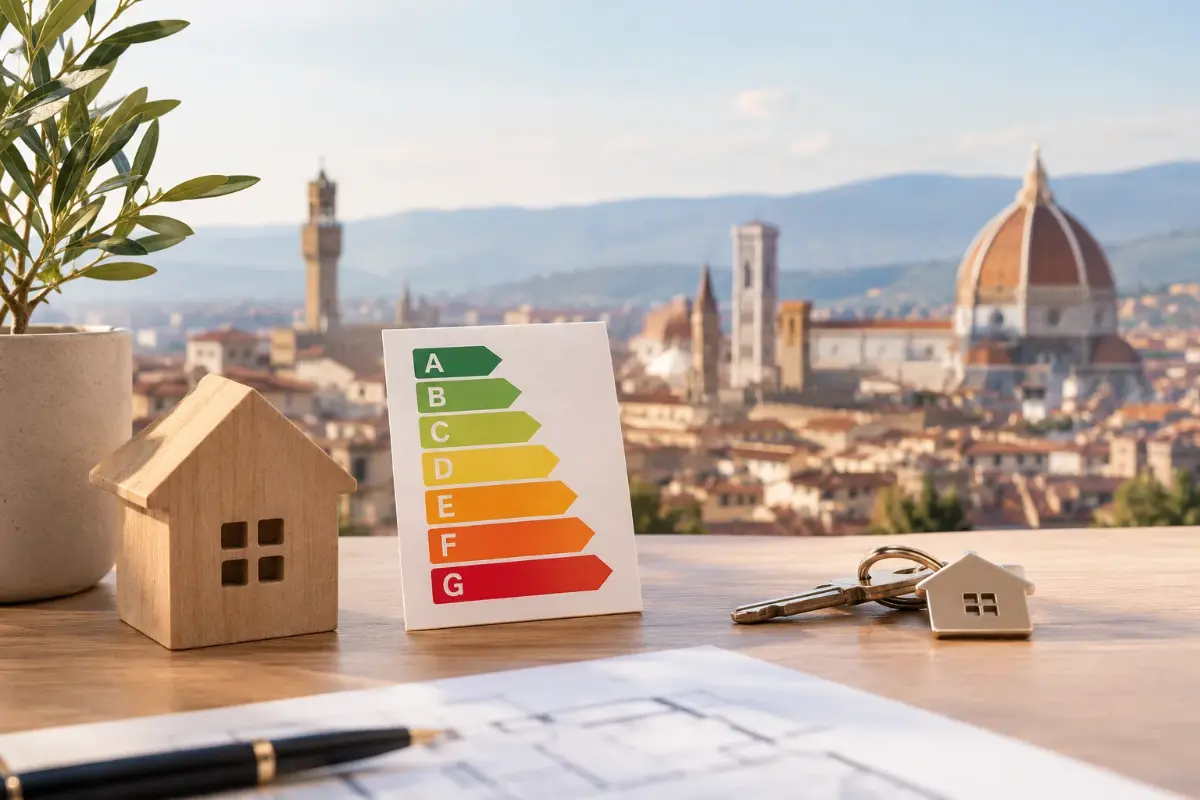
Italy uses ten classes: A4, A3, A2, A1, B, C, D, E, F and G. A4 means the lowest energy use, G the highest. Note that Italy's scale starts at A4, not at A as in some other countries.
The class depends mainly on:
insulation of walls, roof and floors;
the quality of the windows;
the type and efficiency of the heating system;
renewable sources, such as solar panels or a heat pump.
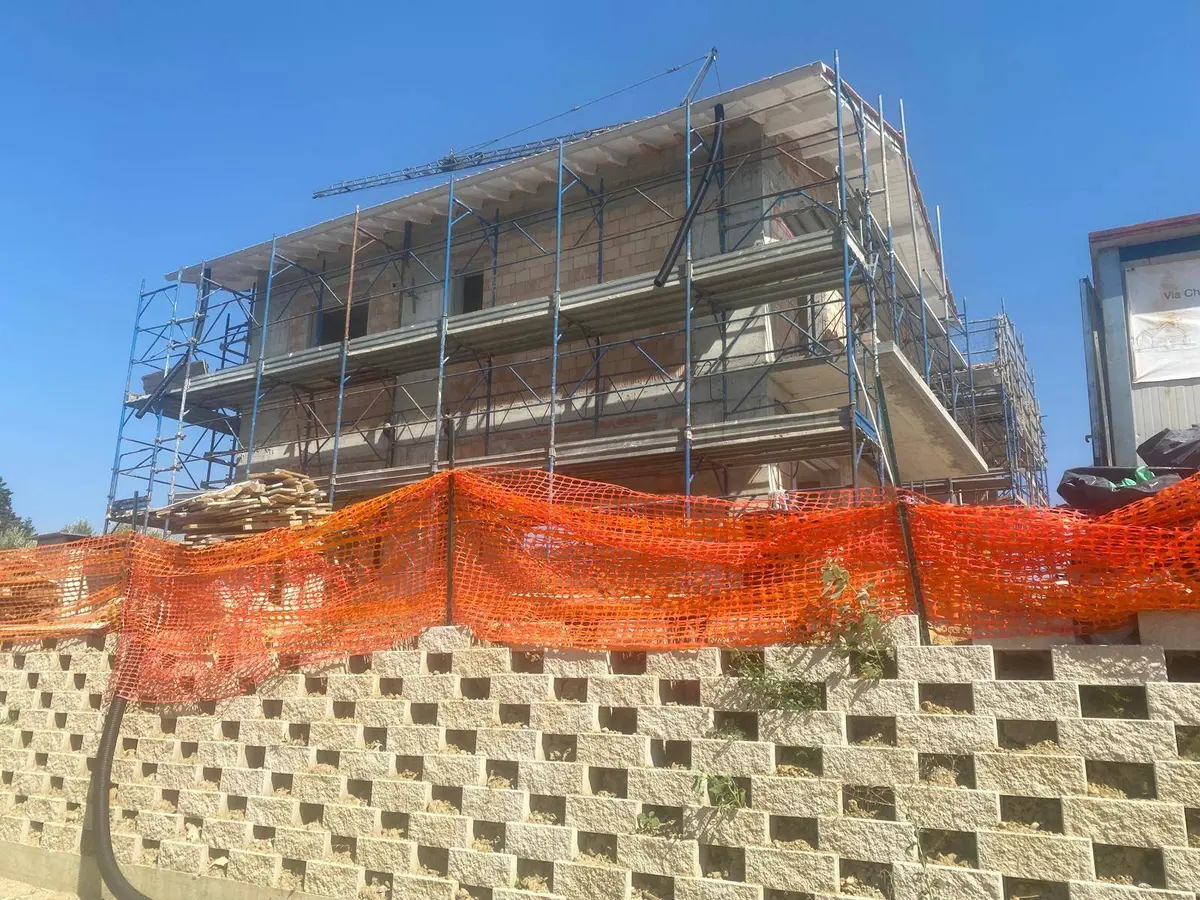
One example from the properties we are offering: a newly built terraced house in Lastra a Signa, just outside Florence, in class A4, with solar panels, a heat pump and external wall insulation.
Low classes are still very common, though. According to the ENEA-CTI 2025 annual report, based on certificates issued in 2024, around 31% of certified homes are in class F or G, while 20% are between A4 and B.
When is the APE required?
Apart from some exemptions set by law, an APE is required:
when a property is sold;
when it is rented out under a new contract that must be registered with the tax authorities;
for new buildings and major renovations.
In a sale, the APE must be attached to the rogito, the final deed of sale signed in front of a notary (in Italy, the notary is a public official who handles every property sale). If it is missing, the sale is still valid, but administrative fines apply. When a single apartment is rented, the contract includes a clause in which the tenant confirms they have received the information and documents on its energy performance.
The APE in property ads
Every sale or rental ad must show the property's energy class and its energy performance index; otherwise, fines apply. If an ad does not show the class, ask for it before booking a viewing.
Who pays for the APE, and how long is it valid?
The owner pays for the APE and must have it prepared when they decide to sell or rent the property. It is valid for ten years, but expires earlier if work is done that changes the home's energy performance.
So it is worth checking the issue date too: a certificate issued before recent works may no longer describe the property as it is today.
What does the energy class mean if you are buying in Florence?
For buyers, the energy class is a useful guide to three things:
the running costs to budget for;
how comfortable the home will be in summer and winter;
any energy-efficiency work you may want to consider later.
Homes in historic buildings
Many homes in Florence are in historic buildings, and a low class does not automatically mean a property should be ruled out. It means you should look carefully at the heating system, the windows and possible improvements, ideally with a technician, and weigh all this together with location, condition and price.
What does the energy class mean if you are renting?
For tenants, the energy class mainly helps you estimate your utility bills. At the same rent, two apartments with very different classes can cost quite differently each month.
Before signing, ask to see the APE and check the type of heating. With independent heating (riscaldamento autonomo), the flat has its own boiler and you pay for what you use. With central heating (riscaldamento centralizzato), the building shares one system: ask whether its cost is included in the condominio fees, the monthly charges for the building's shared costs.
What changes with the EU "Case Green" directive?
Directive (EU) 2024/1275 on the energy performance of buildings, known in Italy as "Case Green", provides among other things for a new European scale of energy classes, the same across the EU. Member states were due to transpose it into national law by 29 May 2026. As of October 2026, Italy has not done so yet, and the European Commission has opened infringement proceedings against all 27 member states.
In the meantime:
the Italian A4 to G scale remains in use;
certificates already issued remain valid until they expire;
the directive does not ban selling or renting low-class homes and does not fine individual owners.
Since 3 June 2026, a new national decree on minimum energy requirements has also been in force. It updates the calculation methods technicians use, but does not introduce the new European scale. We will update this guide when the rules change. For your specific case, details should always be checked with a qualified technician or the notary.
When you look for a home, weigh the energy class together with everything else: location, condition, space and price. You will find the energy class of every home on the pages of the properties we are offering.
Frequently asked questions
Can a class G home be sold or rented in Italy?
Yes. The energy class does not prevent a sale or a rental. What the law requires is a valid APE and the class shown in the ad.
Who pays for the APE?
The owner, whether selling or renting. It is best done before the property is advertised, since the class must appear in the ad.
How long is an APE valid?
Ten years from the issue date. It expires earlier if work is done that changes the home's energy performance, such as on the heating system or the building's insulation.
Will the APE need to be redone because of the Case Green directive?
No. Certificates that are currently valid remain valid until their natural expiry, even after Italy transposes the directive.
Where can I find the energy class of a home for sale or rent?
In the property ad, where by law it must be shown together with the energy performance index. You can also ask to see the full APE.